

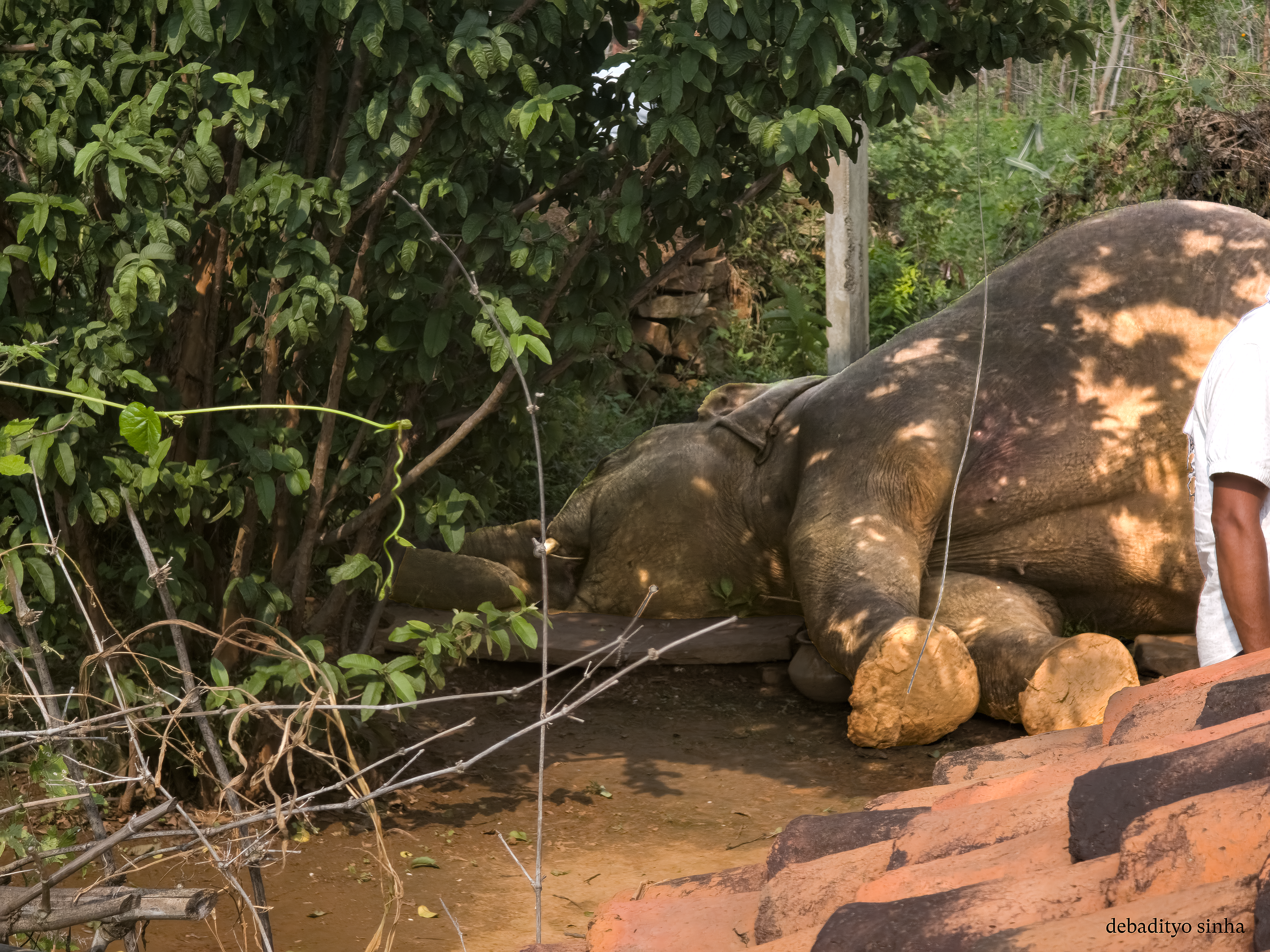
While the country celebrates Ganesh Chaturthi, a young elephant was reported death due to electrocution on Saturday morning in Mauganj, in Madhya Pradesh’s Rewa Division.
He was reportedly 15 to 20 years old, one of two young males from a herd that moved from Chhattisgarh to Bandhavgarh in 2018. The two had strayed into neighbouring landscapes, travelling as far as Mirzapur and Prayagraj in Uttar Pradesh, before he ended up in the forests of Mauganj. They look like refugees of development, pushed out of their traditional landscapes by roads, mining and other forms of habitat transformation, and forced to keep moving in search of somewhere to live.
Four Decades on the Move
This did not begin in Mauganj. Central India’s elephants have been on the move for close to four decades. As mining, drought and reservoirs shrank their habitat in Odisha, and Jharkhand, herds pushed into Chhattisgarh from the late 1980s. As mines multiplied there too, they kept going west in search of a place to settle. In 2018 a herd of about 40 walked into Bandhavgarh, and Madhya Pradesh, which had no resident herd, suddenly had one. Neither the landscape, nor the people, nor the State was ready. The State has shown restraint given its reputation for wildlife conservation historically. But conflict is rising, and coexistence is a comfortable idea for those of us who do not have to live with elephants. For the people who do, it is a distant dream.
I recently moved to Rewa, and I went to the site as soon as I heard that an elephant died in the forest division. I wanted to understand not only how the elephant was electrocuted but why he was there at all, and what the landscape around him looked like. Sumit Singh, a local conservationist friend, got us the location and we set out in the morning together. The site was remote, with very little road access, and we reached it only in the afternoon. Officers from the Forest and Electricity Departments were already there.


Photos: Local residents looking at the house where the elephant body was lying. Some people chose to watch it from a nearby hillock as forest department took custody of the body

Photos: Sorghum crops behind the house where the elephant died.
Local media had already reported the death and demanded accountability from the government, particularly the Forest Department. What I saw on the ground left me with a different impression.
The two males have been in this region only since last winter and have kept constantly on the move, and local media have regularly reported on their movements. They are young and bold, and they have learnt to raid crops and fruit trees with remarkable ingenuity. Villagers told me the pair had been around for some time and had never threatened anyone. The elephants seem to be adapting to human-dominated landscapes, and people are slowly adapting to them.
A Landscape Ringed by Mines
What worried me far more was the landscape itself. Malakpur village is surrounded by large, active sandstone mines. Deep craters left by old mines, with the water table exposed, look deceptively like lakes. Huge dumpers and cranes work across the terrain, and the forests and hills are badly fragmented. Most residents are from tribal communities who stayed on as the mines expanded, and they too live in an increasingly broken landscape. Villages like this may now be among the last refuges left to the elephants, with crops and fruit trees their most accessible food.


Photos of mine spoils, craters and the crushers as seen from the road just before reaching Malakpur.
Extreme Rain, Fewer Refuges
The weather is adding to the squeeze. In August, days of heavy rain flooded Rewa, with reports of raining as high as 187 mm in 24 hours, more than 150 villages affected and rivers such as the Beehar, Tamas and Belan running over. Local reports called it the worst flood in about a decade. No single flood can be blamed on climate change, but this one fits a pattern. The role of big dams and reservoirs in this region in intensifying the floods is yet to be studied, but cannot be ruled out. A study led by scientists at the Indian Institute of Tropical Meteorology found a threefold rise in widespread extreme rain events over central India between 1950 and 2015, even as total monsoon rainfall declined. Longer dry spells broken by violent downpours are hard on people. For elephants in a landscape already cut up by mines, reservoirs and roads, there is very little room to wait out a flood.
Mauganj became a separate district in 2023. As administrative and developmental pressures grow, it is once again the forests, and the people and wildlife who depend on them, that bear the brunt. Mining is one of the district’s main industries and a source of revenue for the state. As in Satna, Katni and Singrauli, local politics across this region revolves around natural resources, and elephants are the most unwanted beings in the landscape. Sympathy for them is hardly good politics.
That shapes how deaths like this are discussed. The public conversation on local media channels centres on the safety of the individual animal and on the accountability of the forest ranger, a young woman officer in charge of a mining-dominated landscape which I doubt has even the capacity and technical or political support for wildlife management. Questions about habitat and connectivity barely surface in such conversations. If this range does not lie near the Sanjay and Bandhavgarh Tiger Reserves, I wonder whether anyone would be taking this as much seriously at all. Demanding accountability from individuals is the easiest and most comfortable response, but it addresses only the most visible part of the problem. The larger question is what we have done to this landscape that leaves a young elephant with so few safe places to go.
When forests fragment, mines expand, roads cut through habitats and wildlife must move through human-dominated landscapes, conflict is no surprise. It follows from the way we develop these places. When an elephant dies an unnatural death, it is a systemic failure, and it shows what development at any cost really costs. The human cost is no less.
Accountability, but for What and from Whom?
We do need accountability and better monitoring. But we also need to look beyond the single incident at the failure to account for wildlife and local communities in planning and development. The death points to weak enforcement of the environmental laws and political will to prevent this. It also points to the helplessness of conservation organisations, which have learnt to be selective about the issues they speak on because the wrong ones carry a price. I do not blame them for that, and I am not exempt! We will keep mourning individual animals killed in such incidents, while supporting the conditions that make such deaths increasingly inevitable.
We have made the elephant a symbol. In law it is a Schedule I species, the highest protection available, and in name our national heritage animal. This week, millions of us are welcoming an elephant-headed god into our homes and neighbourhoods, and we will send him (idols) off with drums and flowers. Yet none of this gives a living elephant a forest to stay in, a corridor to walk along, or a village where an exposed wire is not a death sentence. The statute protects the animal, not the land it needs. Our reverence costs us nothing. The land an elephant needs is already promised to ill-conceived developmental project with hardly any ecological assessments and mitigation measures in place.

Photo: Forest Officers present at the site.
Refugees of Development
These elephants are living a life of a ‘refugee’, having crossed several political borders, moving from Odisha to Jharkhand, then Chhattisgarh, then Madhya Pradesh, and now Uttar Pradesh.. each time the forest behind them shrank. The young elephant in Malakpur was protected by law and revered by his neighbours, and yet he had nowhere to go. Until we treat his habitat as something we owe him, and stop pushing for ill-conceived and unsustainable activities such as our mines, dams and roads around it, we will keep worshipping elephants and killing them.