

The Vanashakti judgment may be paused, but its underlying principles — precaution, prevention and democratic oversight — must continue to define the legal architecture of environmental decision-making

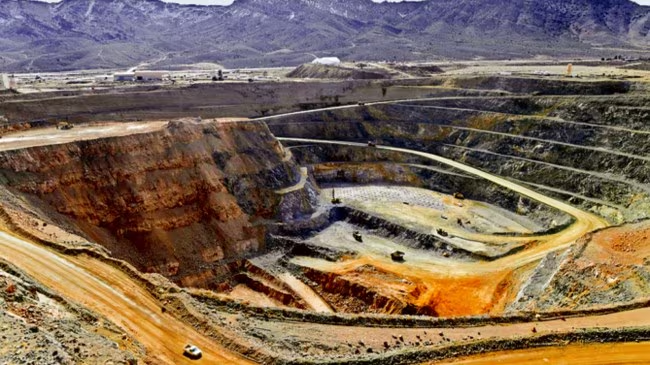
Once a pristine forest is cleared, or a hill is mined, or a wildlife corridor blocked, no penalty, remedial plan, or compensatory afforestation can recreate the ecological integrity or ecosystem services that are lost
The Supreme Court’s recent decision to recall its May 2025 judgment in Vanashakti v. Union of India has triggered confusion and premature celebration among industry players. For those hoping for a return to the era of ex-post-facto Environmental Clearances (ECs), the recall is not a victory, only a delay.
The recall rests on a point of judicial discipline that a two-judge bench cannot appear to contradict earlier two-judge benches that had, in limited and exceptional circumstances, considered the possibility of retrospective EC. Whether such exceptions are legally sustainable and whether they can coexist with the stricter reasoning of earlier judgments now goes to a larger bench.
Crucially, the recall must not be interpreted as endorsement of retrospective approvals, nor does it dilute the principles that guided the original Vanashakti ruling. Unless a larger bench decides otherwise, environmental governance in India remains firmly anchored to the logic that EC must be prior, because ecological damage is often permanent, irreparable, and impossible to offset.
The irreplaceable value of ‘prior’ EC
Environmental Clearance was never meant as a post-construction compliance certificate. It is a scientific and legal safeguard, rooted in the Environment Impact Assessment (EIA) Notification, 2006, to evaluate whether a project should be approved at all — not merely how to mitigate harms after the fact. And it must not be compared to consent to establish/operate granted by Pollution Control Boards, which only focus on limiting emissions and discharge of industrial activity.
The EIA framework is grounded in the precautionary principle and the mitigation hierarchy, which prioritise avoiding harm over minimising, repairing or compensating for it later. The EIA process goes beyond pollution control and is supposed to critically assess and predict the ecological risk, such as loss of natural ecosystems, biodiversity, livelihoods of nature-dependent communities, cumulative impacts of any project at the location and its surroundings. The process mandates early-stage screening and scoping to assess site feasibility and alternatives before detailed studies begin. Public hearing is central to the process — a mandatory stage where affected communities can review EIA findings and……..
This column was originally published by The Indian Express on November 20th, 2025. Read the complete article here.